Heel Pain Treatment in Maryland
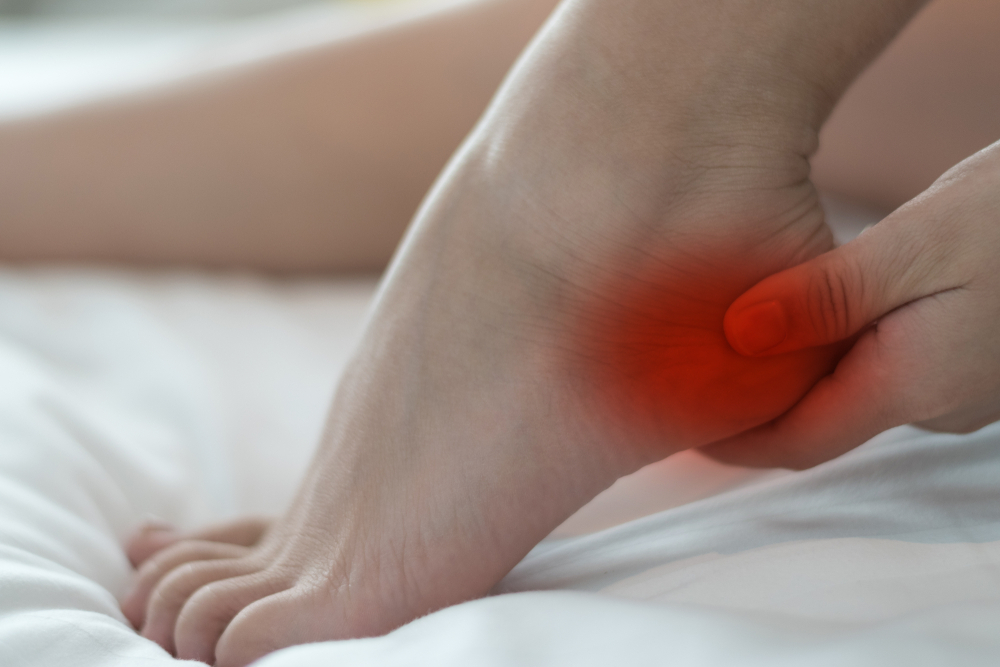
Heel pain is one of the most common complaints we see in podiatry. While it is often assumed to be plantar fasciitis, an accurate diagnosis is essential because heel pain can come from inflammation, a structural injury, nerve compression, or a combination of factors. The podiatrists at Foot Centers of Maryland pinpoint the cause and build an effective treatment plan for patients in Baltimore, Glen Burnie, Timonium, and Reisterstown, MD.
Request an AppointmentCommon Causes of Heel Pain
We use a physical exam and diagnostic imaging to identify or rule out the following:
- Plantar Fasciitis: Inflammation where the plantar fascia attaches to the heel bone, the most common cause.
- Heel Spurs: A bony outgrowth on the heel bone, often associated with chronic plantar fasciitis.
- Achilles Tendonitis: Inflammation of the Achilles tendon, felt at the back of the heel.
- Tarsal Tunnel Syndrome: Nerve entrapment near the ankle causing burning or tingling that radiates into the heel.
- Stress Fractures: Small cracks in the heel bone, common in runners and athletes.
- Fat Pad Atrophy: Thinning of the heel’s natural cushioning, especially with age.
Do Heel Spurs Cause Heel Pain?
Having a heel spur does not change how heel pain is diagnosed or treated. A spur is simply a good indicator of how long the problem has been present and confirms that an underlying biomechanical problem is pulling on the heel.
Symptoms That Help Identify the Cause
- Sharp Morning Pain: Pain with the first steps after sleep or rest is highly characteristic of plantar fasciitis.
- Pain at the Back of the Heel: Pain during or after activity points toward Achilles tendonitis.
- Numbness or Burning: Tingling suggests nerve involvement such as tarsal tunnel syndrome.
- Pain That Worsens with Impact: Increasing pain with running or jumping may indicate a stress fracture.
Comprehensive Heel Pain Treatment
- Arch and Heel Support: Custom orthotics, heel cups, and strapping to control foot mechanics and cushion the heel.
- Stretching and Physical Therapy: Exercises for the plantar fascia, calf, and Achilles tendon.
- Anti-Inflammatory Care: NSAIDs, steroid injections, and ice therapy.
- Advanced Therapies: Shockwave Therapy (EPAT/ESWT) for chronic fascial and tendon pain, and Leneva for fat pad thinning.
- Surgery: Plantar fascia release or other procedures when conservative treatment fails.
Heel Pain FAQs
What is the most common cause of heel pain?
Plantar fasciitis is the most common cause, but heel pain can also come from Achilles tendonitis, stress fractures, nerve entrapment, or fat pad thinning.
Why does my heel hurt in the morning?
Sharp pain with your first steps after sleeping is a classic sign of plantar fasciitis, as the tight fascia is stretched suddenly.
Does a heel spur need to be removed?
Usually not. Heel spurs are a sign of long-standing strain, and treatment focuses on the underlying problem rather than the spur itself.
When should I see a podiatrist for heel pain?
See a podiatrist if heel pain lasts more than a couple of weeks, gets worse, or affects your ability to walk or exercise.
Can orthotics help heel pain?
Yes. Custom orthotics support the arch and control foot motion, reducing strain on the heel and plantar fascia.
What can I do for chronic heel pain?
Chronic heel pain often responds to Shockwave Therapy, injections, physical therapy, and orthotics. Surgery is rarely needed.
Can heel pain be a stress fracture?
Yes. Heel pain that worsens with activity, especially in runners, may be a stress fracture and should be evaluated with imaging.
Stop Heel Pain from Slowing You Down
Get an accurate diagnosis and a plan that works. Call (410) 844-4700 - Overlea Office, Mercy Office, Reisterstown Office, Glen Burnie Office, or Lutherville Office or request an appointment at our Overlea, Mercy, Glen Burnie, Lutherville, or Reisterstown office.