
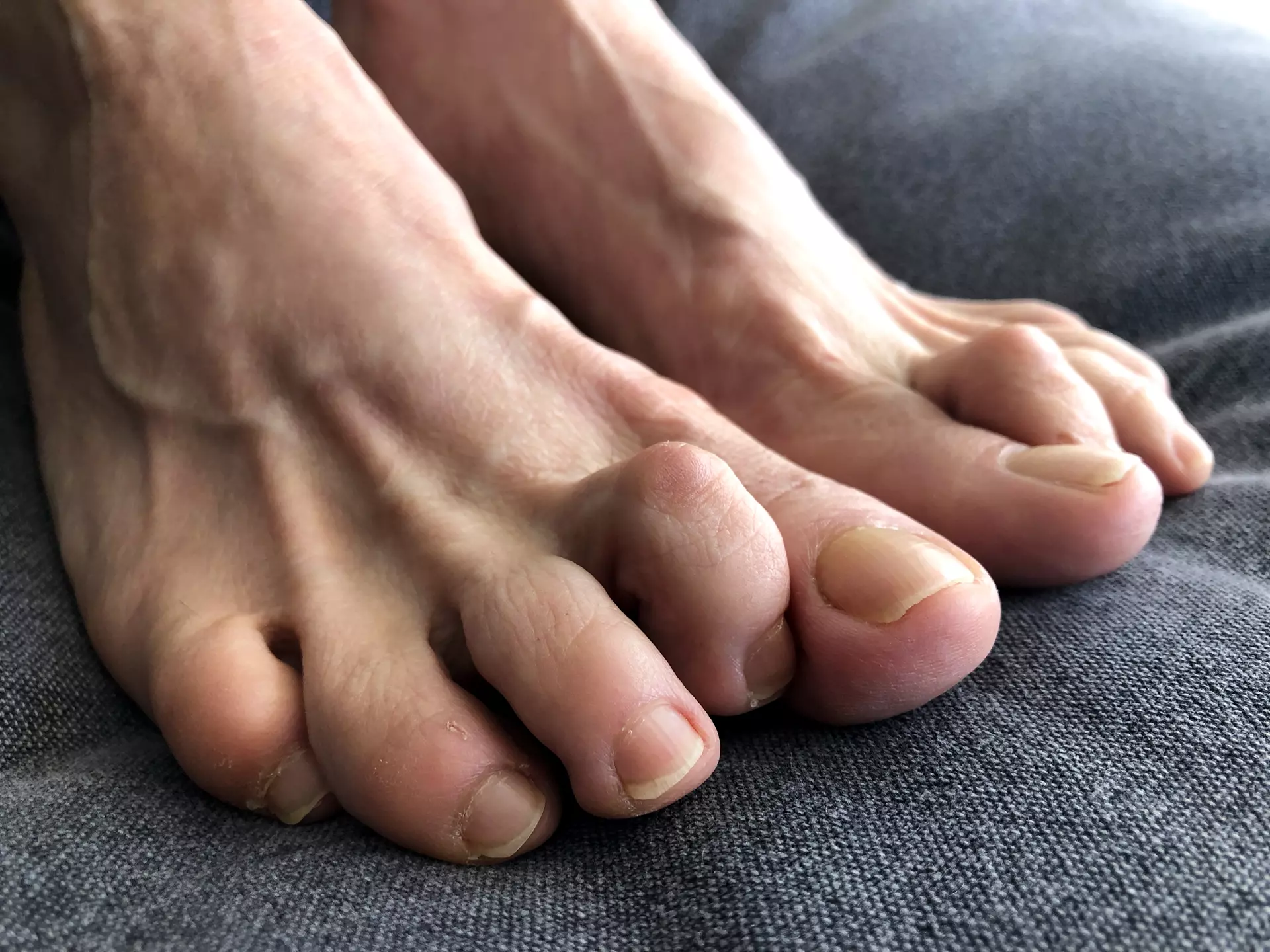
Hammertoe Treatment in Maryland
A hammertoe is a contracture, or bending, of a joint in the second, third, or fourth toe. The bend forces the joint to push upward, creating painful friction against footwear that often leads to corns and calluses. At Foot Centers of Maryland, our podiatrists treat flexible and rigid hammertoes for patients in Baltimore, Glen Burnie, Timonium, and Reisterstown, MD with conservative care and surgical correction when needed.
Request an AppointmentCauses and Progression
Hammertoes are primarily caused by an imbalance in the muscles, tendons, or ligaments that normally hold the toe straight:
- Improper Footwear: Narrow, tight, or pointed shoes squeeze the toes into a bent position.
- Muscle and Tendon Imbalance: Abnormal foot mechanics cause certain tendons to pull harder, leading to contracture.
- Foot Structure: A long second toe, high arch, or bunion increases risk.
- Arthritis and Injury: Joint damage or a previous toe injury can contribute.
Hammertoes start out flexible, meaning the toe can still be straightened, but they become rigid and permanent over time if left untreated.
Recognizing Hammertoe Symptoms
- Pain and Stiffness: Discomfort in the affected toe or ball of the foot.
- Corns and Calluses: Hard skin on top of the bent joint, at the tip of the toe, or between toes. Learn more about corns and calluses.
- Inflammation: Redness, swelling, or a painful bursa around the joint.
- Difficulty with Shoes: Trouble finding footwear that does not rub.
Conservative Treatment for Flexible Hammertoes
- Shoe Modification: Deeper, wider toe-box shoes to reduce pressure.
- Pads and Splints: Silicone padding or toe splints to reposition the toe and prevent friction.
- Corn Care: Professional trimming of painful corns for temporary relief.
- Custom Orthotics: Correcting the mechanical imbalance that contributes to the contracture.
- Injections: Reducing inflammation in a painful bursa.
Surgical Correction for Rigid Hammertoes
When the contracture becomes rigid and pain or swelling persists, our foot and ankle surgeons may recommend:
- Tendon Release: Releasing tight tendons in early rigid cases.
- Arthroplasty or Fusion: Procedures that permanently straighten the toe and eliminate friction and pain.
Hammertoe FAQs
What is a hammertoe?
A hammertoe is a toe that bends abnormally at one or more joints, usually the second, third, or fourth toe, causing the joint to rise and rub against shoes.
What causes hammertoes?
Hammertoes are caused by muscle and tendon imbalances, often made worse by tight shoes, foot structure, bunions, arthritis, or injury.
Can hammertoes be fixed without surgery?
Flexible hammertoes often respond to wider shoes, padding, splints, and orthotics. Rigid hammertoes usually require surgery for permanent correction.
Why do I keep getting corns on my toes?
Corns form where the bent joint rubs against your shoe. Relieving the pressure or correcting the hammertoe stops them from returning.
Will a hammertoe get worse?
Yes, hammertoes tend to progress from flexible to rigid over time, which is why early treatment is important.
How long is recovery from hammertoe surgery?
Recovery depends on the procedure, but many patients return to regular shoes within several weeks.
Should I see a podiatrist for a hammertoe?
Yes, especially if the toe is painful, becoming stiff, or causing corns. Early care offers more non-surgical options.
Straighten Out Your Hammertoe Pain
Get expert treatment before your hammertoe becomes rigid. Call (410) 844-4700 - Overlea Office, Mercy Office, Reisterstown Office, Glen Burnie Office, or Lutherville Office or request an appointment at our Overlea, Mercy, Glen Burnie, Lutherville, or Reisterstown office.