Foot Wound Care in Maryland
Foot wounds and ulcers, especially diabetic foot ulcers (DFUs), are complex medical problems that need immediate professional attention. Because of underlying neuropathy and poor circulation, these wounds often fail to heal on their own and can lead to deep infection and a high risk of amputation. At Foot Centers of Maryland, our priority is fast, effective healing for patients in Baltimore, Glen Burnie, Timonium, and Reisterstown, MD.
Request an AppointmentCauses of Chronic Foot Wounds
- Neuropathy: Loss of sensation prevents patients from noticing pressure, friction, or injury. Learn more about peripheral neuropathy.
- Pressure: Constant pressure on a bony prominence, such as a bunion or hammertoe, breaks down tissue.
- Vascular Disease: Poor circulation keeps oxygen and immune cells from reaching the wound.
- Edema: Swelling from venous insufficiency or other conditions compromises the skin.
- Minor Injuries: Blisters, cuts, and burns that go unnoticed or untreated.
Warning Signs of a Wound Problem
- A sore that has not improved in a few days
- Drainage on your socks
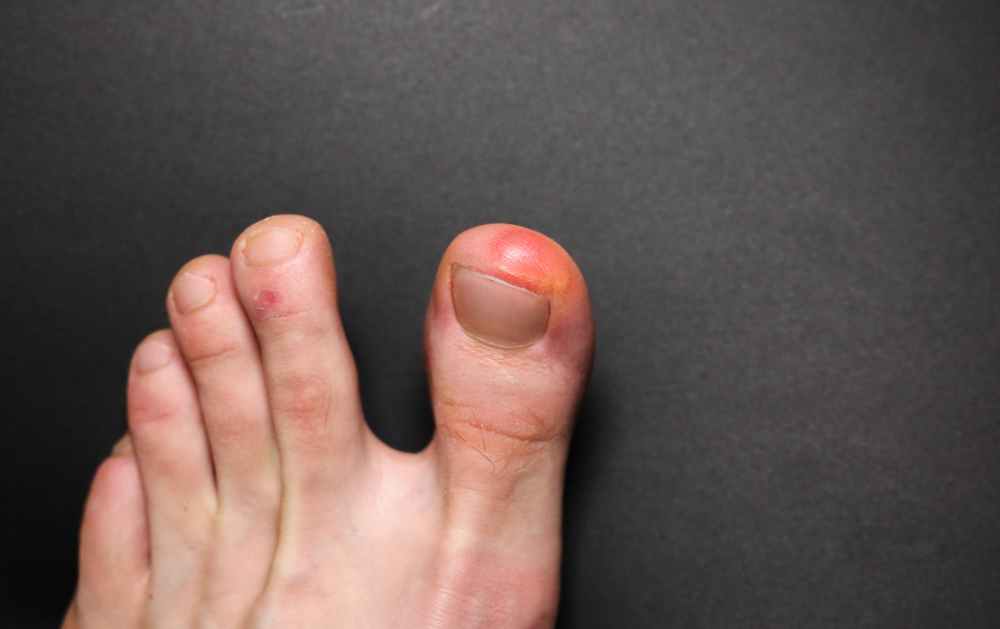
- Redness, warmth, or swelling around the wound
- Odor or discolored skin
- Fever or chills with a foot wound, which needs urgent care
Comprehensive Wound Management Protocol
Our specialized program focuses on the key pillars of wound healing:
- Debridement: Removing dead and unhealthy tissue to promote healthy tissue growth.
- Infection Control: Managing bacteria with targeted antibiotics based on wound cultures.
- Off-Loading: The most critical step, using total contact casts, boots, and orthotics to remove pressure from the wound. Learn more about casting and immobilization.
- Advanced Dressings: Biological and synthetic wound coverings that promote faster healing.
- Circulation Assessment: Evaluating blood flow and coordinating vascular care when needed.
Prevention and Long-Term Protection
Once a wound heals, prevention is essential to avoid recurrence:
- Therapeutic Footwear: Protective shoes and custom inserts that permanently off-load the previous ulcer site.
- Regular Exams: Ongoing visits through our diabetic foot care program.
- Patient Education: Daily foot inspection and knowing when to seek immediate care.
- Correcting Deformities: Addressing structural problems that create high-pressure areas.
Foot Wound Care FAQs
What is a diabetic foot ulcer?
A diabetic foot ulcer is an open sore on the foot, often caused by pressure combined with nerve damage and poor circulation from diabetes.
Why won’t my foot wound heal?
Poor circulation, neuropathy, ongoing pressure, and infection can all prevent foot wounds from healing without professional care.
What is debridement?
Debridement is the removal of dead or unhealthy tissue from a wound to help healthy tissue grow and speed healing.
What does off-loading mean?
Off-loading means removing pressure from the wound using casts, boots, special shoes, or orthotics so the tissue can heal.
When should I see a podiatrist for a foot wound?
See a podiatrist right away for any foot wound if you have diabetes, poor circulation, or neuropathy, or if a wound is not improving.
How long does a foot ulcer take to heal?
Healing time varies by wound size, depth, circulation, and blood sugar control. Many ulcers heal in several weeks with consistent care.
Can foot ulcers come back?
Yes. Therapeutic footwear, regular exams, and daily foot checks are essential to prevent ulcers from returning.
Get Expert Care for Your Foot Wound
Do not wait to treat a wound that is not healing. Call (410) 844-4700 - Overlea Office, Mercy Office, Reisterstown Office, Glen Burnie Office, or Lutherville Office or request an appointment at our Overlea, Mercy, Glen Burnie, Lutherville, or Reisterstown office.