Ingrown Toenail Treatment in Maryland
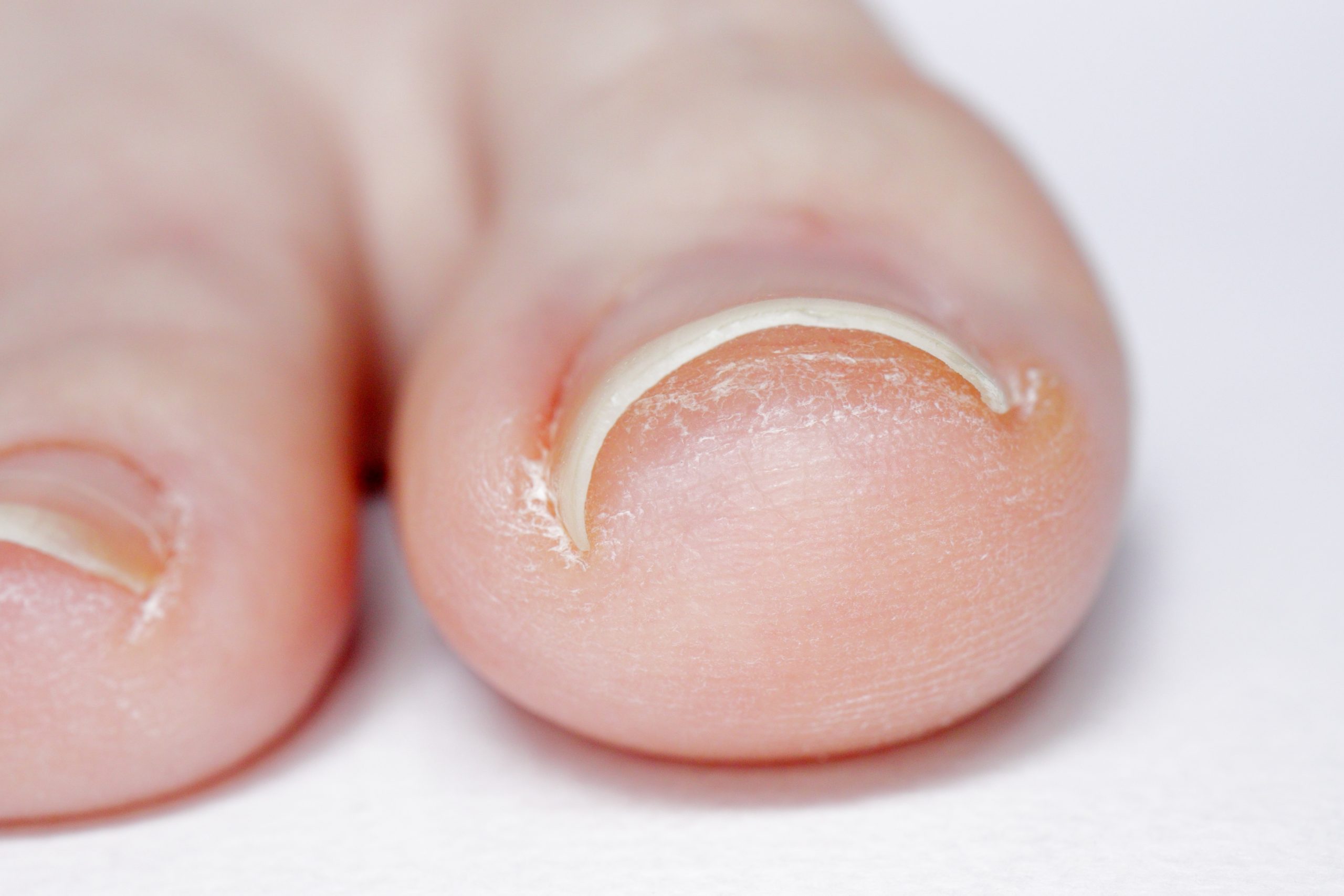
An ingrown toenail (onychocryptosis) occurs when the edge of the toenail, usually on the big toe, grows into the soft skin along the nail groove. It causes pain, redness, and swelling and can quickly lead to infection. The podiatrists at Foot Centers of Maryland provide fast, in-office relief and permanent solutions for ingrown toenails at our Baltimore, Glen Burnie, Timonium, and Reisterstown, MD offices.
Request an AppointmentCauses of Ingrown Toenails
- Improper Trimming: Cutting nails too short or rounding the corners encourages the nail to grow into the skin.
- Tight Footwear: Shoes that press the nail into the surrounding tissue.
- Inherited Nail Shape: Naturally curved or pincer-shaped nails.
- Trauma: Stubbing, kicking, or dropping something on the toe.
- Fungal Nails: Thickened nails from toenail fungus are more likely to become ingrown.
Symptoms That Need Professional Care
- Intense Pain: Persistent tenderness or throbbing along the nail border.
- Redness and Swelling: Inflammation spreading beyond the nail edge.
- Infection: Drainage, warmth, odor, or red, weeping tissue (granulation tissue).
If you have diabetes, neuropathy, or poor circulation, an ingrown nail should be treated promptly to prevent a serious infection. Learn more about diabetic foot care.
Avoid “Bathroom Surgery”
Digging out an ingrown nail at home often leaves a sharp spike of nail behind and can make the problem and infection worse. Professional treatment is quick, comfortable, and much safer.
Treatment Options for Relief and Prevention
- Partial Nail Avulsion: After numbing the toe, we gently remove only the offending edge of the nail, providing immediate relief.
- Permanent Correction (Matrixectomy): For chronic or recurring ingrown nails, a chemical solution is applied to the nail root so that section does not grow back.
- Infection Management: Antibiotics and wound care when infection is present.
Preventing Ingrown Toenails
Trim your toenails straight across and not too short, wear shoes with enough toe room, and protect your feet during sports. If you struggle to trim your nails safely, our geriatric foot care services include professional nail care.
Ingrown Toenail FAQs
What causes an ingrown toenail?
Ingrown toenails are usually caused by trimming nails too short or rounding the corners, tight shoes, an inherited curved nail shape, or injury to the toe.
Is ingrown toenail removal painful?
The toe is numbed with a local anesthetic before the procedure, so most patients feel little more than the initial injection.
How long does the procedure take?
Partial nail removal is a quick, in-office procedure that typically takes only a few minutes.
Can an ingrown toenail be fixed permanently?
Yes. A matrixectomy treats the nail root so the ingrown edge does not grow back.
Should I see a doctor if my ingrown toenail is infected?
Yes. Signs of infection such as pus, warmth, and spreading redness need professional treatment, especially if you have diabetes.
How soon can I return to normal activity?
Most patients return to normal activities the same day or within a day or two, with simple home care instructions.
How can I prevent ingrown toenails?
Trim nails straight across, avoid cutting them too short, and wear shoes with enough room for your toes.
Get Fast Relief from a Painful Ingrown Toenail
Do not let an ingrown toenail turn into an infection. Call (410) 844-4700 - Overlea Office, Mercy Office, Reisterstown Office, Glen Burnie Office, or Lutherville Office or request an appointment at our Overlea, Mercy, Glen Burnie, Lutherville, or Reisterstown office.